Transform Your School Carnival with Inflatable Obstacle Courses
Every school carnival competes with memories. Students remember the year the principal got dunked, or when the robotics team ran the cotton candy booth and everything turned blue. If you want this year’s event to stand out, add energy where it matters most: movement, laughter, a little friendly competition, and a spectacle that draws a line at the ticket booth. Inflatable obstacle courses bring all of that. They solve crowd flow problems, engage a wide age range, and, when chosen thoughtfully, pay for themselves in ticket revenue while elevating the whole day.
I have helped plan and staff dozens of school festivals around the region. We’ve run quiet library lawn afternoons and full-blast homecoming extravaganzas. When we introduced an inflatable obstacle course to a mid-size elementary carnival a few years ago, ticket sales rose by roughly 28 percent over the previous year with a similar budget. That wasn’t because we advertised more or booked a band. It was because families could see the course from the parking lot, kids could race in quick rounds, and word spread. The line became a scene, and the scene became the anchor of the event.
Why obstacle courses outperform simple bouncers
Most organizers start with a basic inflatable bounce house because it’s familiar. A birthday party bounce house or a classic bouncy castle rental is simple, relatively inexpensive, and great for freestyle play. The limit, for a carnival, is throughput and spectacle. Kids linger inside, so the line creeps, and from twenty yards away it looks like a colorful cube.
An inflatable obstacle course changes the equation. It is a defined start-to-finish challenge with lanes, tunnels, squeeze walls, climbing ramps, and a slide at the end. Two to four kids race at once, each run lasts one to two minutes, and you can move 60 to 120 participants per hour without rushing anyone. That scale matters when you have a four-hour event window. It also photographs beautifully, which helps with promotion and next year’s PTA slideshow.
The energy of a race shapes behavior too. You get fewer accidental collisions than inside a free-play inflatable bounce house, because traffic flows in one direction. Volunteers can monitor the start and finish points instead of policing a shapeless jumble of jumps.
When a course is the right fit for your campus
Not every carnival can handle a giant course, especially older campuses with tight courtyards or sloped athletic fields. Size ranges are wider than most people realize. Short backyard-style courses can be 30 to 40 feet long and fit into the kind of footprint you might use for an inflatable slide rental. Mid-length school favorites run between 50 and 70 feet. The showstoppers stretch 90 feet or more, sometimes with a 16 to 20 foot slide tower at the end.
A good rule of thumb: if you can fit two school buses front to back with 10 feet to spare on each end, you have room for a 60 foot course plus safe buffer zones. If space is tighter, consider a compact unit with a U-turn layout that returns racers near the starting area to preserve flow. Indoors is possible as well. A gym with a minimum 18 to 20 foot ceiling can handle certain indoor bounce house rental options, including low-profile obstacle courses designed to clear basketball hoops and lights. Ask vendors for ceiling height requirements in writing and confirm access through doors or roll-up bays.
Safety choices that matter more than the price tag
Every inflatable looks cheerful on a website. What keeps the day safe is not the color, it is the system around it. When you search for a local bounce house company, ask about staff training, insurance, and anchoring, not just availability and price. I have seen more issues from under-staffed setups than from the equipment itself.
Wind is the biggest variable. Most manufacturers and insurers call for suspending operations at sustained winds of 15 to 20 mph, with absolute shutdown above that. Good vendors carry anemometers and put them out where the sky meets the trees, not next to the gym wall where readings can be misleading. Ask your provider if they will bring and use a wind meter. Serious companies say yes without hesitation.
Anchoring is non-negotiable. On grass, steel stakes driven 30 inches or more are the standard. On pavement, water barrels or concrete ballast are used, tied with heavy straps to multiple anchor points. If your carnival sits on blacktop, confirm how many barrels are required and where they will go. Don’t assume a simple bounce house rental setup applies to a 70 foot obstacle course. The longer the unit, the more points it needs.
Staffing is the third pillar. Plan on two to three attendants for mid-size courses: one at the start, one at the finish, and a roamer to help with lines or quick resets. Some PTAs try to save by staffing with volunteers only. That can work if your volunteers commit to fixed shifts and wear radios or have a clear handoff plan. The most reliable arrangement is a hybrid, with the vendor providing at least one trained attendant to supervise safety and a rotating crew of parent volunteers to manage the line. Hour four is when attention wanes and minor issues creep in. Have backups.
Dry or wet: the summer school dilemma
As the weather warms, water slide rental pages start to look tempting. Most obstacle courses have a wet upgrade kit, which turns a final drop into a splash zone and keeps kids cool. Before you say yes, walk the grounds with a custodian. Ask where water runoff will go. Check for GFCI outlets near the setup area and measure the distance for extension cords and hoses. Plan a second shoe station and some towels, plus a note for families to pack swimsuits or quick-dry clothing.
Wet courses magnify fun on hot days, but they also bring more mud, more towels, more lost socks, and a longer teardown. If your field drains poorly or your event ends just before a varsity soccer practice, stick with a dry setup and a misting tent nearby. A dry inflatable obstacle course rental still carries the event. Add a separate water slide rental only if staffing and grounds can handle it.
Throughput and ticket math that can fundraise without friction
This is where obstacle courses shine. For a typical 60 foot course with dual lanes, plan on 90 to 120 riders per hour if you keep the line fed. At a four-hour carnival, that’s 360 to 480 total runs. If you sell unlimited wristbands, the course is a marquee benefit that justifies a slightly higher price tier. If you sell tickets per ride, test a price point that feels fair for a 90-second experience and adjust based on your community. I have seen schools succeed with $2 to $3 per run, or with a “fast pass” window for families who purchase sponsor bundles.
Don’t overthink the perfect price on your first try. The bigger lever is keeping the line moving, which depends on clear rules, loud friendly staff, and a visible timer or music-driven cadence so kids know when to start. Post a height range if needed, and segment by grade during peak hours to reduce mismatched races that slow things down.
How to choose the right course from your vendor’s catalog
Not all courses are built equal. Some emphasize crawl-through obstacles that younger kids love. Others lean into climbing and slides that reward bigger legs and better grip. If your carnival serves K to 5, pick a course with alternating speeds: soft pop-ups, a squeeze wall, a mid-height climb, then a slide under 14 feet. If you are booking for middle school, a taller slide and a faster sprint segment keeps older kids engaged. Ask for the age rating and weight per user, and compare it to your likely crowd. A model rated for ages 5 to adult gives you the most flexibility.
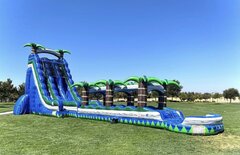
There is a temptation to book the longest possible unit. Bigger looks better in photos, but it also takes more power, more volunteers, and more room for safe margins. A 50 to 60 foot unit with dual lanes often hits the sweet spot. If you want extra variety without a longer footprint, consider pairing the course with a complementary inflatable game rental like an axe throw toss or a soccer darts wall. These event inflatable options keep kids nearby without slowing the main line.
Power, logistics, and the unglamorous details
Most medium obstacle courses run on two 1.5 to 2 horsepower blowers, which draw roughly 7 to 12 amps each at 110 volts. Two dedicated 20 amp circuits close to the setup area are ideal. Extension cords longer than 100 feet introduce voltage drop and tripped breakers. If your outlets are far away or shared with concession equipment, ask your vendor about a quiet inverter generator sized for continuous use. A single 7000 watt unit with clean power usually handles a dual-blower course with margin to spare.
Delivery and teardown time often surprise first-time planners. Budget 45 to 90 minutes for setup, depending on distance from the truck to the field and whether ballast is required. Teardown runs faster on dry days, slower on wet grass. Build buffer on your run-of-show so the vendor is not hauling carts across your opening ceremony. If your campus has gates that close at specific times, align the vendor schedule with the custodian’s availability. On large campuses, a five-minute escort for a truck can save half an hour of guesswork.
Insurance, permits, and the things the district wants to see
Most districts require a certificate of insurance with the school named as additionally insured. Ask for a COI at least two weeks in advance, not on the morning of the event. If you are renting from a local bounce house company you have used before, confirm that their policy is current and that inflatable obstacle courses are included, not just bounce houses. Some municipalities require temporary permits or inspection for inflatables over a certain height. Your vendor should know the local rules; ask them to summarize them in an email so you can share with your principal or risk manager.
If your PTA or booster club is signing the contract, decide who is the on-site authority to pause or stop operation due to weather. Put that name on the run sheet alongside the vendor lead and the school administrator on duty. When lightning shows up on a summer afternoon, decisions get messy. Clarity keeps everyone calm.
Integrating the course into the flow of the day
A great carnival feels like a circuit, not a crowd clump. Place the obstacle course where people can see it from a distance, but not at your only entrance. Give yourself 15 feet of buffer around the unit on all sides for line queues and safety, plus a marked walking lane so families can pass without cutting through the line. If you sell food, keep the stickiest items away from the start line. Sugary hands make for slippery grips.
Think about sound. The blowers hum at a steady volume, which fades into the background, but a speaker blasting right next to them forces your staff to shout. Put music ten to twenty feet away and angle it toward the crowd. The sound of kids racing and cheering is part of the draw. Don’t drown it with a microphone monologue.
A small prize board solves one of the strangest carnival dynamics: the repeat racer who wants to go again and again while other kids wait. Simple colored wristband tabs or hole punches can limit re-entries during peak time. Alternately, schedule grade-level windows. For example, kindergarten through second grade from 12:00 to 12:30, third through fifth from 12:30 to 1:00, then open play afterward. Your volunteers will thank you.
Pairing with the right inflatables for variety without chaos
Balance matters. A course plus one other anchor inflatable is often enough. If you add a purely vertical attraction, such as a tall standalone inflatable slide rental, you risk splitting your trained staff and doubling your safety zones. If you want a second piece, think horizontal: a mini maze for smaller kids, a bouncy castle rental with a capped capacity, or a themed kids party inflatable tucked on the other side of the field.
For indoor winter carnivals, swap the wet gear for compact options and an indoor bounce house rental that fits your ceiling limit. If you host a spring fundraiser on the blacktop, a party inflatable rental line-up with a course and a single lane slide keeps the vibe active without turning your layout into a labyrinth. For fall homecoming nights, a glow-lit event inflatable like a neon obstacle course adds visual punch when the sun goes down.
Working with vendors like a pro
Relationships drive reliability. Book early with a vendor you trust, and treat their crew like part of your team. Walk the site together on arrival, point out sprinkler lines, overhead power, and any new construction hazards. Offer water and a shaded spot to rest. Good crews reciprocate by hustling on teardown and staying alert when the line gets rowdy.
Clarity in writing prevents day-of misunderstandings. Your invoice should list exact units, dimensions, power needs, delivery times, staffing, wet or dry configuration, and cancellation policy. If you plan to use school-provided power and cords, note that. If your PTA will provide line managers, note that too. I have never regretted adding a two-sentence weather clause to a simple contract. It keeps you from debating rain credits at 6 a.m. on a Saturday.
What to say in your promo materials
Parents skim and decide fast. Lead with a photo of the actual inflatable obstacle course you booked rather than a generic clip art bounce. Mention the length, the dual-lane race feature, and an age suggestion. If you run a presale for wristbands, highlight access to the course. Share a short video from the vendor if they have one, ideally a clip that shows the start and finish to set expectations for line flow.
Emphasize inclusivity. If you plan quiet hours for students who need reduced stimulation, say so, and actually dim the music for that window. If you provide a separate toddler jumper rental area, mark it on your map so families see that you have thought about younger siblings. These details build trust and turn first-time attendees into regulars.
Staffing plan that keeps smiles up and risk down
Two positions make or break the experience: the starter and the spotter. Your starter needs a voice that can carry without barking, a sense of fairness, and the confidence to hold a kid back if they are too small, too slippery from the snow cone, or simply not ready. Your spotter lives at the exit slide, helping racers land, keeping the end clear, and making sure no one runs back into the course the wrong way. Rotate every 45 minutes and provide water breaks.
Train your line managers to answer the same four questions all day: How many tickets, how long is the wait, can siblings race together, and where do I put shoes. https://www.tumblr.com/sacramentopartyjumps Put shoe bins within five steps of the start, and lay out two cheap yoga mats as a sock-safe path. A laminated sign that reads Shoes here, socks only on the course saves your starter from repeating themselves a hundred times.
Common mistakes, and how to avoid them
I have seen brilliant carnivals undone by three predictable issues. The first is placing the course uphill. Slopes look minor until a tired six-year-old tries to climb a slick ladder at a tilt. Keep your course on flat ground. The second is underestimating power. If the blowers trip a breaker twice, your line dissolves. Use dedicated circuits or a generator, and tape down cords with heavy-duty floor tape. The third is letting the schedule slip. If your course opens 40 minutes late, the crowd shifts to other areas, and you never quite regain momentum. Build in setup buffer and open on time.
One more subtle error: mixing wet and dry riders without a plan. If you run a water-ready inflatable slide rental nearby, wet clothes will migrate to your dry course. Either accept that and lay towels at the start, or designate the course as dry only and enforce it kindly. Kids will test that line. Your starter needs the authority to hold it.
Making it work for birthdays, field days, and beyond
Once the community sees what a well-run course adds to a school carnival, requests multiply. You will field questions about birthday party bounce house options, backyard party rental needs for team picnics, and whether the PTA can bring the same unit to the spring field day. The answer is often yes, with lighter staffing and fewer barriers if the crowd is smaller. For private events, a compact kids party inflatable or jumper rental can be enough. For field day, the same course can rotate classes by homeroom, turning it into a timed relay challenge with a scoreboard. That angle adds a layer of competition older students enjoy.
When families ask for referrals, give them two reputable contacts instead of one. A reliable local bounce house company might book out quickly on weekends, and your reputation benefits from choice. Encourage parents to ask about sizing, age ratings, and safety practices, the same way you did.
A sample timeline that avoids the crunch
Here is a lean, realistic sequence for a Saturday carnival that runs noon to 4 p.m.
- Two weeks out: Confirm unit selection, power plan, staffing names and shifts, wet or dry mode, and COI delivery. Share a map with the vendor.
- 8:45 a.m. day of: Vendor arrival window, site walk, power test, and setup.
- 10:15 a.m.: Safety check, line signage up, shoe bins placed, radios distributed to volunteers.
- 11:45 a.m.: Staff briefing at the course, review rules and hand signals, set music volume.
- 12:00 p.m.: Open on schedule. Starter sets a consistent cadence within the first ten minutes.
- 2:00 p.m.: Volunteer rotation and quick sweep under the course for dropped items. Check blower filters for debris.
- 3:40 p.m.: Close the line with a sign and a friendly volunteer, letting the last group finish by 4:00.
- 4:05 p.m.: Teardown begins. Volunteers return bins and signage. Vendor clears by 5:00 to 5:30 depending on conditions.
That cadence has worked for elementary and middle school events in fair weather. In hotter months, add a shade canopy near the start and a cooler with water. In colder months, encourage gloves for kids, which improve grip on the rope climb.
When an obstacle course isn’t the answer
There are edge cases. If your festival lives in a narrow courtyard with no accessible power and no vehicle access for delivery, a course may be impractical. If your attendance skews heavily toward toddlers, a big race could overshadow age-appropriate fun. In those cases, a lower, open-front inflatable bounce house with a strict capacity limit and a dedicated toddler time protects little ones. Pair it with simple inflatable game rental booths like ring toss or penalty kick for older siblings. Save the course for a larger field day or a homecoming weekend on the football practice field.
Budget is another limiter. If your funds only cover a short rental window, remember that setup time eats into your event. It might be better to book a smaller unit for a longer block than a giant unit for an hour. The magic comes from the flow, not the footprint.
Final thoughts from the field
A school carnival succeeds when it gives kids a story to tell at breakfast on Monday. An inflatable obstacle course does that with color and motion and a little bit of grit as they scramble up the ladder. It invites parents to cheer, teachers to race a friendly heat after their shift, and volunteers to feel like part of a well-oiled show. Choose a unit that fits your space and your students, work with a vendor who treats safety like a craft, and staff the start and finish with your best communicators. The rest takes care of itself.
If you already plan to include a bouncy castle rental for free play and an inflatable slide rental for variety, great. Thread them together with the obstacle course as your anchor and keep your line moving. Whether your vendor lists it under event inflatable, inflatable obstacle course rental, or kids party inflatable, the heart of the experience is the same: a fair race, a safe landing, and that proud moment at the end when two grinning kids high-five, then rejoin the line to try again.